Introduction
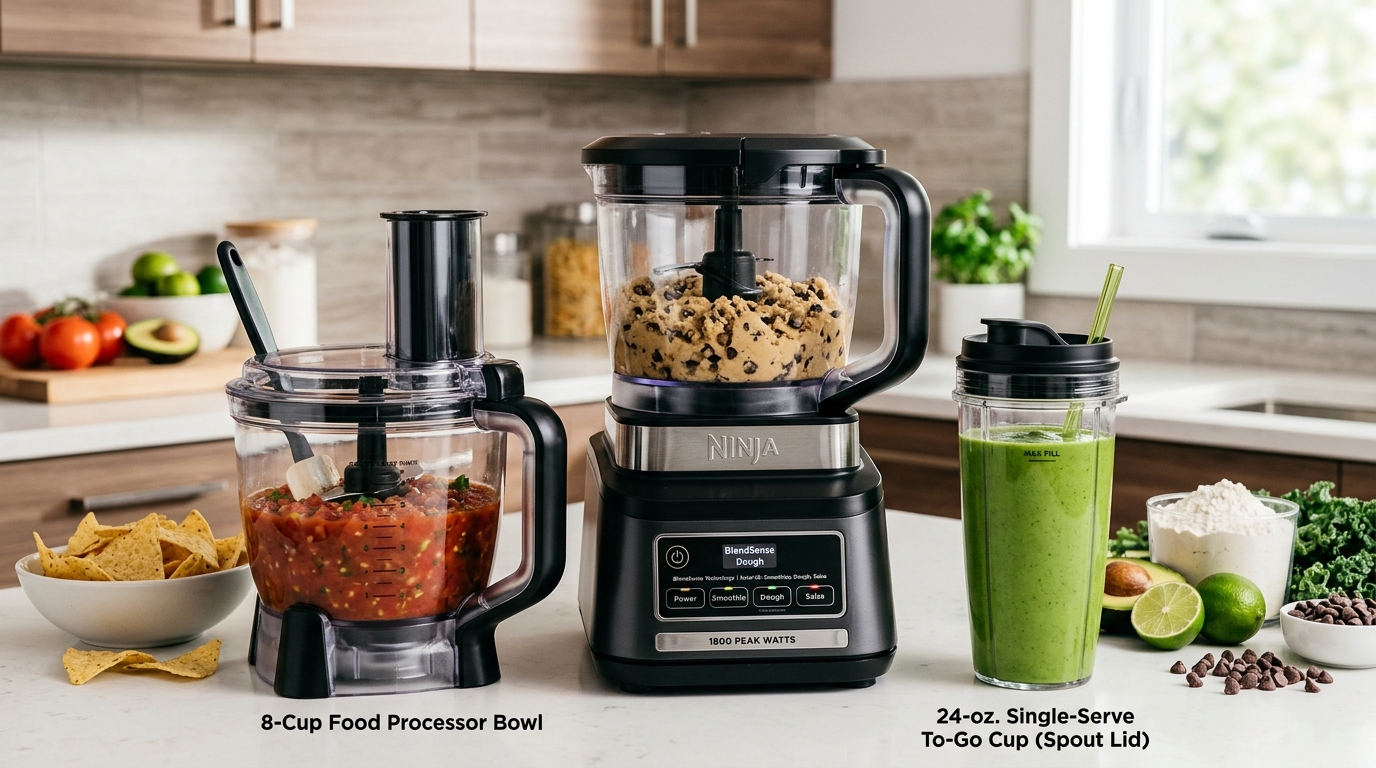
Combining a blender and food processor into one appliance isn’t a new idea, but the Ninja Kitchen System TB401 adds a specific twist with what the brand calls BlendSense Technology, aimed at automatically adjusting the blending process based on what’s actually in the pitcher or bowl. Alongside that, it includes an 8-cup processing bowl and a 24-ounce to-go cup, positioning it as a fairly complete system for smoothies, dough, salsa, and general food processing tasks. This article goes through what the TB401 actually offers, how its various components tend to get used in a typical kitchen, who it’s probably worth buying for, and a handful of practical points worth knowing before it becomes part of your regular cooking routine.
As with the other product breakdowns in this series, this isn’t about declaring it the single best kitchen system on the market — it’s about laying out exactly what it does so you can weigh it against your own prep habits and kitchen space.
Key Features
BlendSense Technology. This is Ninja’s term for a sensing system built into the appliance, generally intended to detect the consistency or resistance of what’s being blended and automatically adjust blending time or intensity in response, aimed at more consistent results without needing constant manual monitoring.
1800-peak-watt motor. This is a notably strong power rating, generally supporting demanding tasks like crushing ice, blending frozen ingredients, or processing tougher foods without excessive strain on the motor.
8-cup processing bowl. A dedicated bowl included specifically for food processing tasks, generally used for jobs like making cookie dough, chopping vegetables, or preparing salsa, separate from the blending-focused pitcher.
24-ounce to-go cup. A smaller, personal-sized cup is included, intended for single-serving blending tasks like an individual smoothie that can be taken along after blending, rather than needing to use a larger pitcher for one portion.
Multi-purpose functionality. Beyond basic blending, this system is positioned as capable of handling smoothies, cookie dough, salsa, and a broader range of food prep tasks, reflecting its dual identity as both a blender and food processor.
Black exterior design. A fairly understated design intended to fit into a range of kitchen aesthetics without appearing overly technical or bulky given its range of functions.
How It Can Be Used
For everyday smoothie-making, this system is commonly used with the 24-ounce to-go cup for individual portions, letting BlendSense Technology automatically adjust the blending process based on the specific ingredients and their consistency, aimed at producing a smooth, consistent result without manual intervention.
The 8-cup processing bowl is generally used for a different category of tasks entirely — chopping vegetables, making cookie dough, or preparing salsa, relying on the food processor’s blade action rather than a blender’s more liquid-focused approach.
Because of its strong 1800-peak-watt motor, this system is frequently used for tougher blending tasks like crushing ice or processing frozen fruit, tasks that can strain less powerful blenders or food processors.
BlendSense Technology is generally relied upon throughout various tasks to help reduce the guesswork involved in figuring out exactly how long or how intensely something needs to be blended, particularly useful for those less experienced with judging blending consistency by eye or sound alone.
Given its combination of a processing bowl and a personal blending cup, this system is often used across multiple stages of meal prep in one session — processing cookie dough for baking, then switching to the cup for a smoothie, all without needing separate appliances for each task.
Who It May Be Suitable For
Households wanting to consolidate a blender and food processor. Given its dual functionality, this system may particularly appeal to those hoping to avoid owning two separate appliances for blending and food processing tasks.
People who make personal smoothies regularly. The included 24-ounce to-go cup suits those who prefer single-serving blending over always using a larger pitcher for one portion.
Home bakers who make cookie dough or similar recipes. The 8-cup processing bowl and its suitability for cookie dough specifically make this system relevant for those who regularly bake at home.
Those who want more automated, consistent blending results. BlendSense Technology may particularly appeal to those wanting to reduce the guesswork involved in manually judging blending time and consistency.
Anyone with limited kitchen storage wanting fewer separate appliances. Combining blending and processing functions into one system can reduce the total number of individual appliances needed, appealing to those with limited cabinet or counter space.
Those who only need one specific function — for example, exclusively smoothie blending without any food processing needs — may find a simpler, single-purpose blender sufficient without the added complexity and storage requirements of a multi-container system like this one.
Important Things to Consider
Storage for multiple containers. With a processing bowl, a to-go cup, and the main motor base, this system requires more cabinet or counter storage space than a single-container blender would need.
Learning how BlendSense responds to different ingredients. While generally intended to simplify blending, it may take a bit of initial use to understand how the sensing technology responds to different ingredient combinations and consistencies.
Cleaning multiple components after each use. Depending on how many containers are used in a single prep session, cleanup can involve washing several separate parts rather than just one blending jar.
Motor noise during operation. As with most powerful blenders, particularly when crushing ice or processing tougher ingredients, some real operational noise is typical, especially at higher speeds.
Not identical to a dedicated stand mixer for all dough tasks. While the processing bowl handles cookie dough and similar recipes well, very heavy or extensive dough kneading may still be better suited to a dedicated stand mixer for some bakers’ specific needs.
Counter space for the full system. Even though components can be stored separately, the motor base itself still requires a dedicated spot on the counter or in a cabinet, along with sufficient space to switch between different attachments during use.
Comparison of General Categories
All-in-one blender and food processor systems with smart sensing technology, the category the TB401 belongs to, generally aim to combine multiple appliance functions with some degree of automated adjustment, appealing to those wanting both versatility and reduced manual monitoring.
Standard blender and food processor combo systems without smart sensing offer similar dual functionality but generally rely more on manual speed and time settings rather than automatic adjustment based on ingredient consistency.
Standalone high-power blenders focus purely on blending tasks like smoothies, soups, and frozen drinks, generally offering a simpler single-container design without food processing capability.
Standalone food processors are built specifically for chopping, processing, and dough-related tasks, often with more specialized attachments for those specific jobs compared to the blending-focused design of a dedicated blender.
Personal or single-serving blenders focus on individual smoothie-sized blending only, generally more compact and affordable than a full multi-container system, but without the larger-batch or food processing capabilities.
The right category generally depends on how many distinct kitchen tasks a household wants consolidated into one system, how much value is placed on automated, sensor-based adjustments versus manual control, and whether food processing and blending are both genuine, regular priorities.
Frequently Asked Questions
What does BlendSense Technology actually do? It’s a sensing system built into the appliance intended to detect the consistency or resistance of what’s being blended and automatically adjust blending time or intensity, aimed at more consistent results without manual monitoring.
Can this system both blend and process food? Yes, it includes an 8-cup processing bowl for food processing tasks like chopping or making cookie dough, in addition to blending capability using the included to-go cup.
How powerful is the motor? It has an 1800-peak-watt motor, generally suited to handling tasks from crushing ice to processing tougher ingredients for dough or salsa.
What is the to-go cup used for? The 24-ounce cup is generally used for individual, single-serving blending tasks, such as personal smoothies that can be taken along after blending.
Can it make cookie dough? Yes, the 8-cup processing bowl is specifically suited to tasks like making cookie dough, along with other food processing jobs like chopping vegetables or preparing salsa.
Is cleanup more involved than a standard blender? Depending on how many components are used in a single session, cleanup can involve washing multiple separate parts, which is generally more involved than cleaning a single blending jar alone.
Is this system worth it for someone who only wants to make smoothies? For those with a narrower, single-purpose need like smoothies alone, a simpler standalone blender may be sufficient without the added complexity and storage requirements of a full multi-container system like this one.
Conclusion
The Ninja Kitchen System with BlendSense Technology (TB401) combines an 8-cup processing bowl, a 24-ounce to-go cup, and an 1800-peak-watt motor into a versatile system aimed at covering smoothies, cookie dough, salsa, and general food prep tasks. Its BlendSense Technology is specifically designed to reduce the guesswork involved in manual blending, automatically adjusting based on ingredient consistency.
Whether this specific system fits your kitchen depends on how many distinct tasks — personal smoothies, food processing, dough-making — you’d actually use regularly, along with available storage space for its multiple included containers. For those looking to consolidate a blender and food processor into a single, smart-sensing system, the TB401 offers a fairly comprehensive set of features built around everyday kitchen flexibility.